Foam Roof Repair & Recoating in Scottsdale
An old foam roof does not automatically need replacement
Many existing foam roofs need maintenance before they need a full replacement. The question is whether the foam and substrate are still sound enough to repair and recoat.
SCOTTSDALE, AZ
Tile Roof Underlayment Replacement in Scottsdale
When the tiles still look good but the roof does not
One of the most confusing Arizona roofing situations is a tile roof that looks fine from the street but leaks during rain.
The issue may be the waterproofing below the tile rather than the tile itself.
Common foam-roof problems
01
Worn or chalking topcoat
02
exposed foam
03
punctures from foot traffic or service work
04
failed details around penetrations
05
poor drainage
06
exposed foam
07
old patchwork
08
storm/hail damage
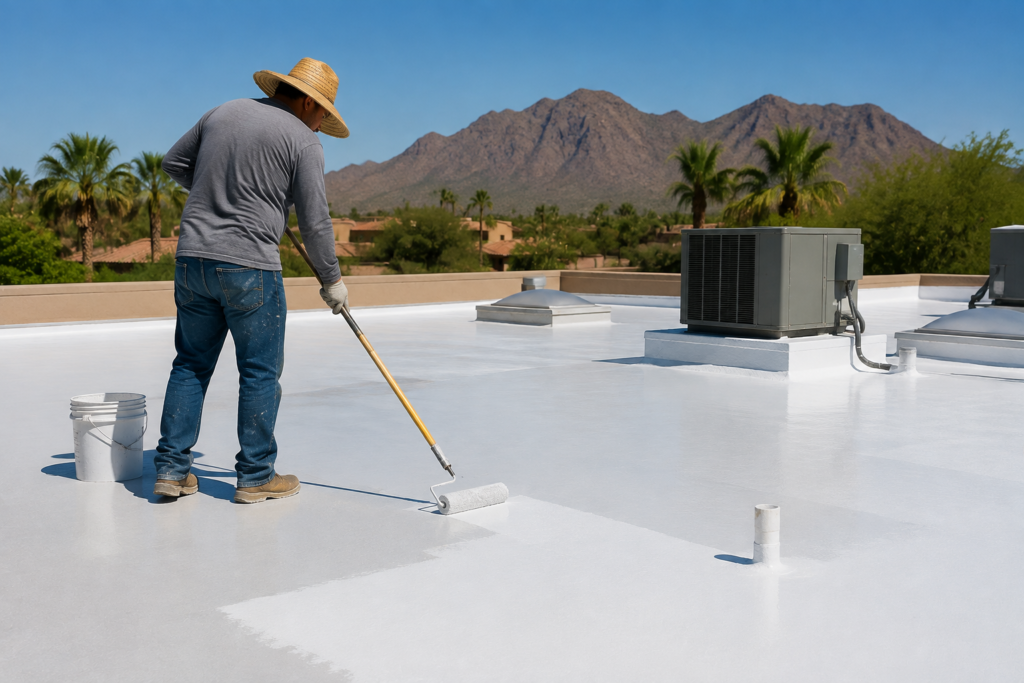
What a recoat should not hide
A new coating should not be used to cover wet, loose or deteriorated roofing without addressing the underlying problem. Soft areas, trapped moisture, failed foam and drainage defects need to be identified first.
THE PROCESS
Typical repair/recoat process
Inspect and identify damaged areas.
Clean and prepare the surface
Remove or repair unsuitable material
Correct details that can be corrected
Repair foam/flashings as required
Apply the compatible coating system to the proper preparation and specification.
The actual products and application rates should come from the contractor/manufacturer — not generic website promises.
FAQs
Have an older foam roof that is cracking, leaking or losing coating?
Call [PHONE] for a repair/recoat evaluation.